Drums stop sounding punchy in a dense mix because they lose three things at once: a fast, defined attack, a level that holds up against everything else, and enough harmonic density to survive on a phone speaker. The fix is not more volume. It is control of density, careful preservation of transient information, and contrast between the drums and everything fighting for the same space.
What follows is the order I work in, and it holds whether you are in Ableton Live, FL Studio, Logic Pro, Cubase, Studio One, Bitwig or Reason. Most of the moves take under an hour on a single loop once you know which one is broken.
Table of Contents
- What You Need
- Step-by-Step: How to Make Drums Punch in a Dense Mix
- 1. Start with a focused drum arrangement
- 2. Balance the individual drum sounds so they punch in a dense mix
- 3. Shape the kick for impact
- 4. Add snap to the snare and clap
- 5. Make hi-hats and percussion cut without clutter
- 6. Glue the drum bus without flattening it
- 7. Check the punch in context
- Common Mistakes
- Frequently Asked Questions
- Should I compress a drum bus or compress each drum separately?
- How much low-end EQ should I use on a kick?
- What makes electronic drums sound punchy in a mix?
- Should hi-hats be louder than the snare in a dense mix?
- How do I make drums louder without making the entire mix harsh?
- Is parallel compression useful for electronic drum mixes?
What You Need
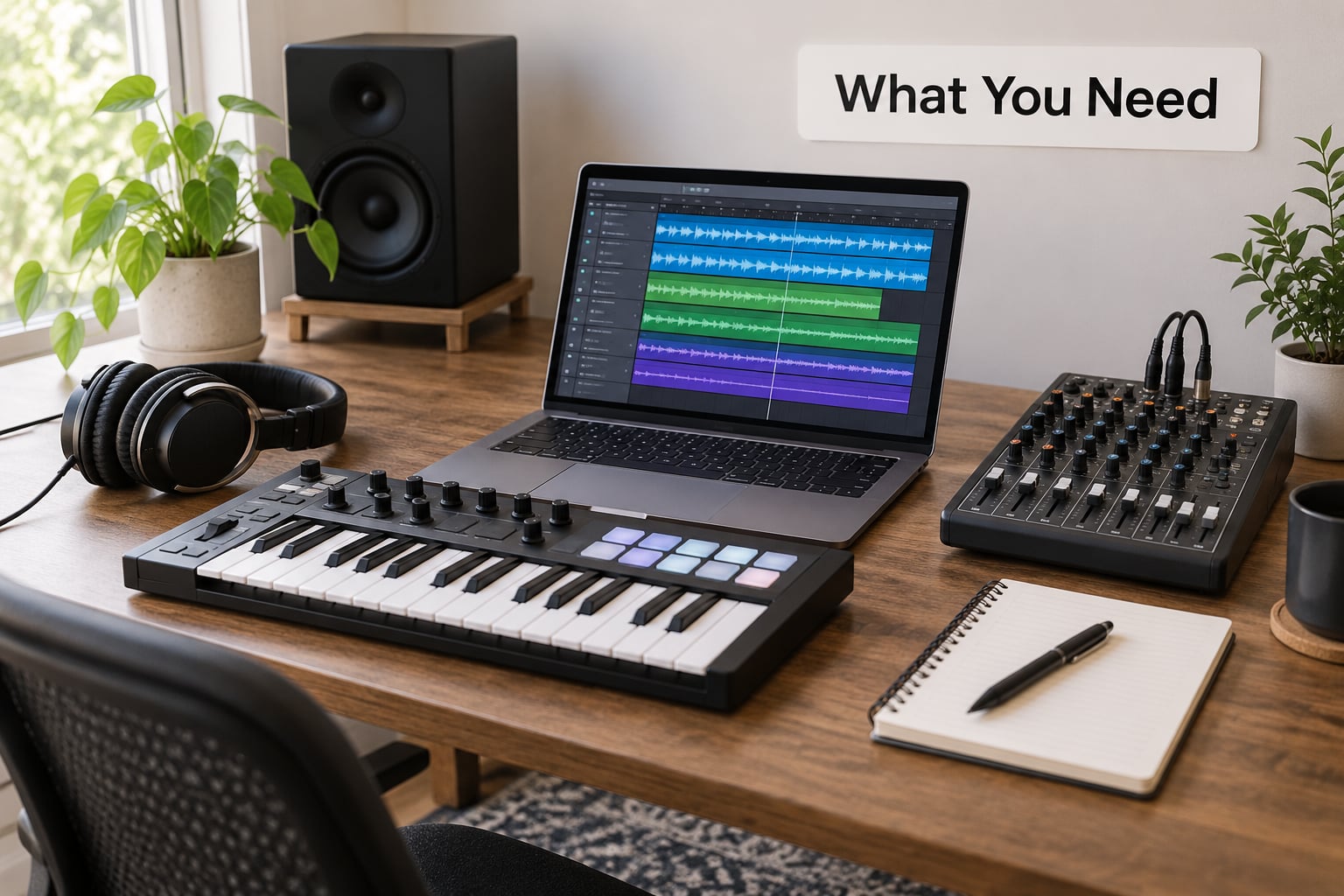
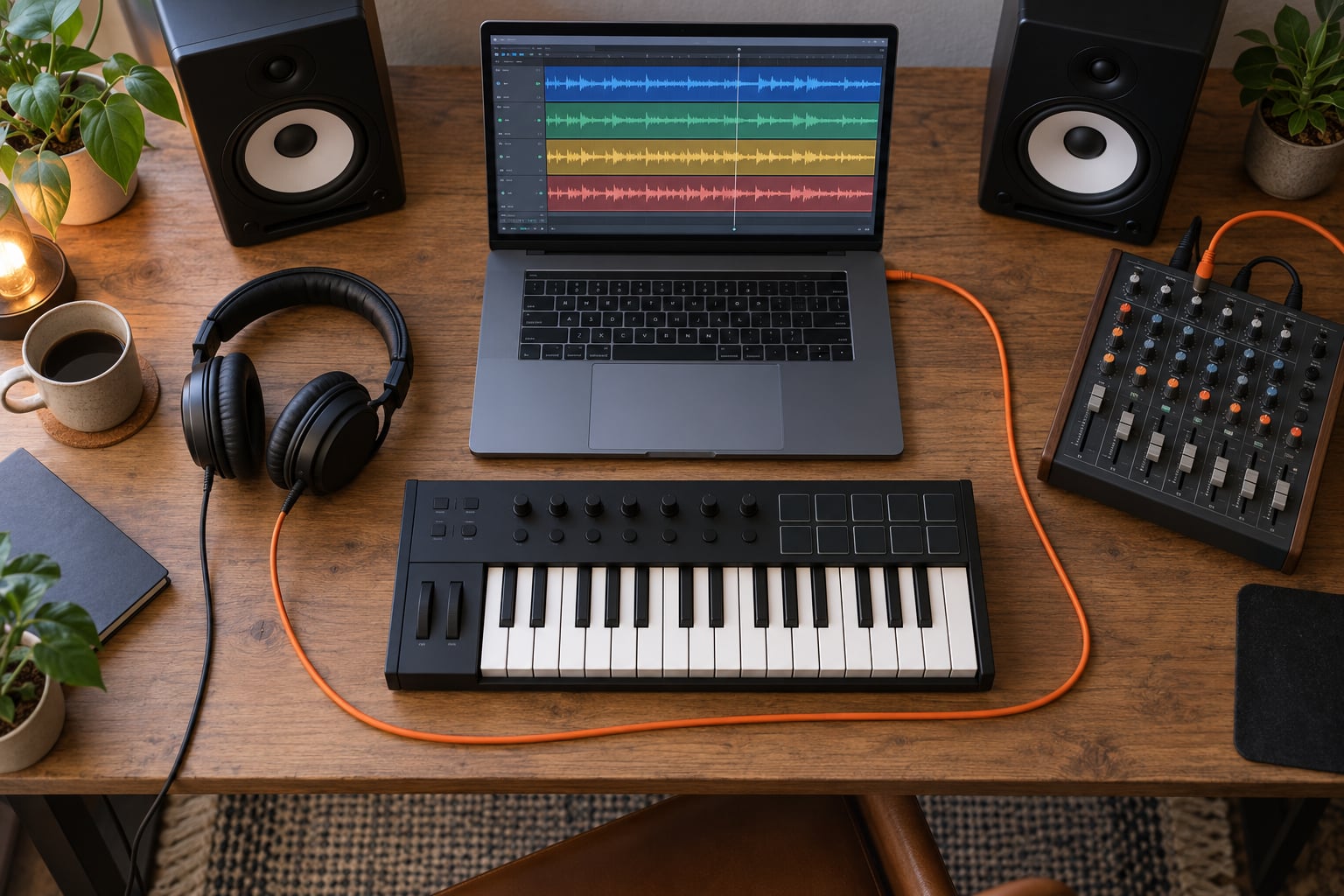
You need very little. A drum bus, a parametric EQ, a compressor you can set attack and release on properly, some form of saturation or soft clipper, and something for transient control. Every DAW listed above ships all four, so nothing here depends on third-party plugins.
Before you touch anything, prepare the session. Bypass every plugin on every drum track and every drum bus so you are judging raw sounds. Then loop the busiest eight bars in the song, because punch that works in a sparse intro will not survive the full arrangement. Set a rough level on the drum bus and write the number down in a comment in the track header. You will need it later for honest level-matched comparisons.
One last preparation step matters more than people expect: find a reference track you trust and load it on a send you can flip to. A/B against something you already like beats guessing every time.
Step-by-Step: How to Make Drums Punch in a Dense Mix
The workflow below is deliberately ordered. Each step assumes the previous one is finished, because fixing them out of order is how mixes end up with five corrective plugins and no improvement. If you want the short version of how to make drums punch in a dense mix, it is: thin the arrangement, set a clean balance, give the kick and snare a defined front edge, then add glue and density last.
1. Start with a focused drum arrangement
Density is an arrangement problem before it is a mixing problem. In a busy track, the drums rarely lose because the kick sample is bad; they lose because four other instruments are playing the same rhythm in the same register during the same bars.
Mute the guitars, mute the pads, mute the bass. Listen to the drums alone for ten seconds. If the groove does not make sense on its own, no amount of processing will rescue it, and you should go back to the arrangement. Mute the drums instead and listen to what is competing. Anything playing the same rhythm as your kick in the low end is a masking risk you can solve with arrangement rather than EQ.
Then automate. A hat pattern that plays the same volume through all eight bars stops reading as motion. Ride the level into the chorus and pull it back in the verses, and the same hat suddenly punches because the arrangement gives it somewhere to go.
2. Balance the individual drum sounds so they punch in a dense mix
With everything bypassed, build a static balance. Set the kick and snare first, because they carry the beat. Add the clap just under the snare level, then hats, then toms, then any percussion layers last. Most lost drum mixes are not a processing failure; they are a balance where the hat sits level-matched with the snare.
Decide what the main beat is in your track and let everything else support it. If the groove is a kick pattern, the hats stay behind it. If the backbeat is the hook, the snare leads. A dense mix punishes any element competing with the intended focus, because at that density nothing has room to also be a lead.
Keep supporting parts short. A hi-hat that rings for a second fills frequency space nobody gave you. A tight, in-and-out kit translates far better in a full arrangement than a big room-heavy one, which is a point people on drum forums keep making for good reason.
3. Shape the kick for impact
The kick needs two separate jobs, and most dense mixes fail because one plugin is being asked to do both. Low end carries weight, the click carries the sense of impact. Handle them separately.
Start with a high-pass filter around 30 to 40 Hz to clear rumble that is only stealing headroom. Then decide what the bass guitar or 808 is doing. If the bass covers roughly 40 to 120 Hz, keep the kick’s weight there and lean on the click. If the bass sits high, let the kick own the low range instead.
For the click, a transient shaper with a modest attack boost of 2 to 4 dB and a sustain cut of 2 to 3 dB gives you a defined front edge without adding level. Put it before compression. A compressor with a fast attack will eat that spike before it reaches the mix, which is the single most common reason a kick feels flat in a busy track.
For weight, use a slow compressor: attack between 10 and 30 ms, ratio 4:1, and aim for 2 to 3 dB of gain reduction on the loudest hits. That is control, not crushing. Then add a little saturation or soft clipping on the low band. Gain reduction tightens the low end, and saturation puts harmonic content around it so the weight survives on small speakers.
4. Add snap to the snare and clap
Snare crack lives in the upper midrange, roughly 3 to 5 kHz, and that is exactly where guitars and synths sit. A snare that sounds enormous on its own and vanishes in the mix is almost always a masking problem in that band.
High-pass the snare track around 80 to 120 Hz to stop it doubling with the kick, then work on the crack. A gentle boost around 3 to 5 kHz with a narrow-ish Q, or a dynamic EQ band that opens only when the snare hits, will separate it from sustained guitar parts. The dynamic EQ version is better in a dense mix because static boosts get you closer to that harsh edge everyone complains about.
Compress the snare with a fast-ish attack of 5 to 15 ms so it stays percussive, a punchy release, and 3 to 4 dB of gain reduction. One thing to watch: raising sustain on a snare also raises the hi-hat bleed picked up by the same mic. If your snare starts sounding like it has hats stuck to it, pull the sustain boost back before reaching for EQ.
The clap is easier. High-pass it above the snare’s fundamental, keep it a few dB under the snare, and let it add width rather than level.
5. Make hi-hats and percussion cut without clutter
Hats and percussion have one job: motion in the gaps. The mistake is pushing them up until they compete with the backbeat, which fills the mix with midrange noise and makes everything sound tired.
Separate them by frequency instead of level. Hats that need to cut through guitars often want a high-pass around 500 Hz to 1 kHz so they are not fighting the snare and bass for the same space. A compressor with a short decay time keeps a closed hat from turning into a wash of cymbals in the loudest sections.
Use stereo placement as a tool rather than a default. Moving percussion off the centre leaves the middle of the mix for the kick and snare, where the groove lives. Pan room mics and toms wide, keep hats narrow, and then check the whole thing in mono. Wide room mics and stereo 808s are the most common cause of mixes collapsing when they fold down.
6. Glue the drum bus without flattening it
A drum bus is worth it once the kit has real character worth holding together. Route kick, snare, hats, toms and room mics to it, and leave the bus itself doing much less than most people assume.
Start with a slow-attack compressor at roughly 2 to 4 dB of gain reduction, a 4:1 ratio and a release that lets the tail breathe. On a bus, a fast attack flattens every hit into a single block of sound and takes the punch out. Slow attack lets transients through and only controls the body underneath, which is exactly the glue behaviour you want.
Parallel compression works well here. Send the bus to a second compressor, push it hard for character, and blend the return underneath the dry signal. You get density without the timing impact of crushing the main path. Parallel saturation is a popular move in hip-hop production for the same reason, and parallel distortion is a reliable way to add bite to a drum bus that reads politely at low volume.
Add soft clipping last, on the bus output. It can make the kit sound louder while metering lower, because it adds harmonics rather than peak level. That is the trick to keeping punch when you need to pull the drum level down to sit properly in the balance.
7. Check the punch in context
Every judgment you have made so far is unproven until it survives the rest of the mix. Bring the guitars, bass, synths, vocals and effects back up and listen to the full arrangement, not a solo loop.
Then check properly. Solo the drums and note the level, solo everything else, and confirm the drums still sit where you left them. Bypass your drum processing entirely and see whether the difference is worth the complexity you added. Check the mix in mono, since much of what creates impact on large monitors disappears when the low end folds together.
Level-match any A/B comparison. If you boost the drums and they sound punchier, you have measured nothing except volume. Match the level with a gain utility, then bypass, and only then decide.
Finish on translation checks rather than your monitors. Play it on a phone, on a laptop speaker, in a car, and through a single small speaker. Dense mixes that fail do so on those systems first, because the harmonics that keep a hit audible on a phone are exactly what a boosted static EQ often removes. Comparing against your reference track at the end catches anything your ears have adapted to.
Common Mistakes
Boosting the whole drum mix. Turning up the bus fixes level, not punch, and it drags every hat and room mic up with it. Lower the bus and raise the kick and snare individually instead.
Over-compressing. More than about 4 dB of bus gain reduction starts removing the timing variation that makes drums feel human. If you need more density, reach for parallel compression or saturation rather than turning the ratio up.
Using too much low-end EQ on a kick. A wide low boost sounds impressive in solo and turns to mud against a bass line. Cut the frequency the bass already owns and shape the click instead.
Losing the kick or snare identity. If you cannot recognise the drum in solo after processing, you have pushed it too far. Reset and start from the balance rather than trying to EQ your way out.
Raising hats to fix a weak arrangement. When the groove feels unclear, louder hats make it worse. Go back to step one and clear the competing parts.
Judging drums in isolation. Solo balance is a starting point, never a destination. In a dense mix, a slightly recessed kick can read as more powerful than one pushed to the front.
Static aggressive EQ on a moving arrangement. A boost that sounds great in the verse can be the harshness you complain about in the chorus. Dynamic EQ is built for this, which is why it earns its place in a busy mix.
Frequently Asked Questions
Should I compress a drum bus or compress each drum separately?
Do both, in that order. Compress kick and snare individually first so each one has even internal dynamics, then use the bus for glue only. On the bus, set a slow attack of 10 to 30 ms and aim for 2 to 4 dB of gain reduction. A fast bus attack squashes every transient into one block and removes the punch you were trying to build.
How much low-end EQ should I use on a kick?
Less than you think. High-pass the kick around 30 to 40 Hz, then cut the band your bass already occupies rather than boosting around 60 Hz. In a dense mix, low-end boosts accumulate into mud and eat headroom. Most of the perceived impact should come from a shaped click between 1 and 3 kHz and a little saturation around the low band.
What makes electronic drums sound punchy in a mix?
Three things: a fast, well-defined attack, a level that holds up against competing parts, and enough harmonic density to survive on small speakers. Transient shaping creates the front edge, slow-attack compression controls the body without flattening it, and soft clipping or saturation adds the harmonics. Raising the fader does none of these things, which is why it is never the answer on its own.
Should hi-hats be louder than the snare in a dense mix?
Rarely. The snare usually carries the backbeat, so hats level with it will compete for the same attention and fill the midrange with noise. Keep hats a few dB under the snare and separate them by frequency instead of level, with a high-pass around 500 Hz to 1 kHz so they occupy space the guitars are not using.
How do I make drums louder without making the entire mix harsh?
Add perceived loudness rather than peak level. Soft clipping or a saturator on the drum bus generates harmonics, so the kit reads as louder and more present while its peaks stay lower and headroom remains. Pair it with a transient shaper to sharpen the front edge. Harshness almost always comes from fast-attack compression and stacked static boosts, not from the level.
Is parallel compression useful for electronic drum mixes?
Very. Send the drum bus to a second compressor, set it hard for character and density, then blend the return underneath the dry signal. You get the weight of heavy compression without the loss of transient timing on the main path. Parallel saturation works the same way and adds bite to a drum bus that sounds polite when played back at low volume.
If you only do one thing today, build a clean static balance with every plugin bypassed on the busiest eight bars of your track. Then fix the kick, then make a single transient move on the snare, and re-check everything in mono and on a phone. Punch in a dense mix comes from arrangement and contrast, and those three moves are where it starts.