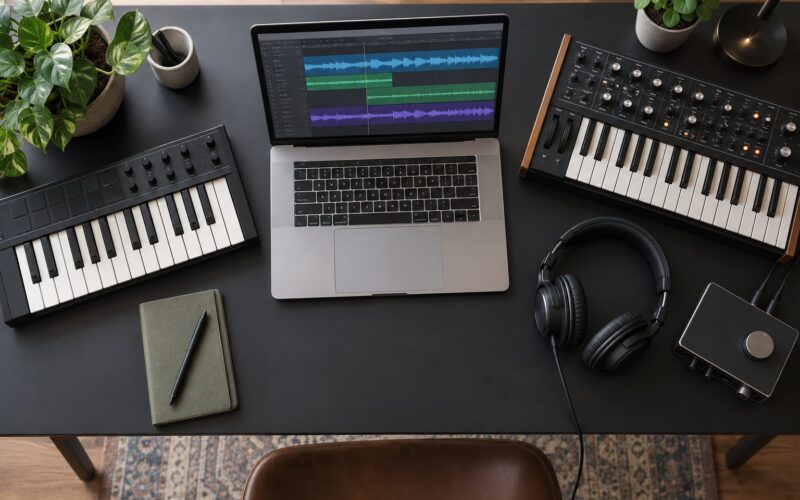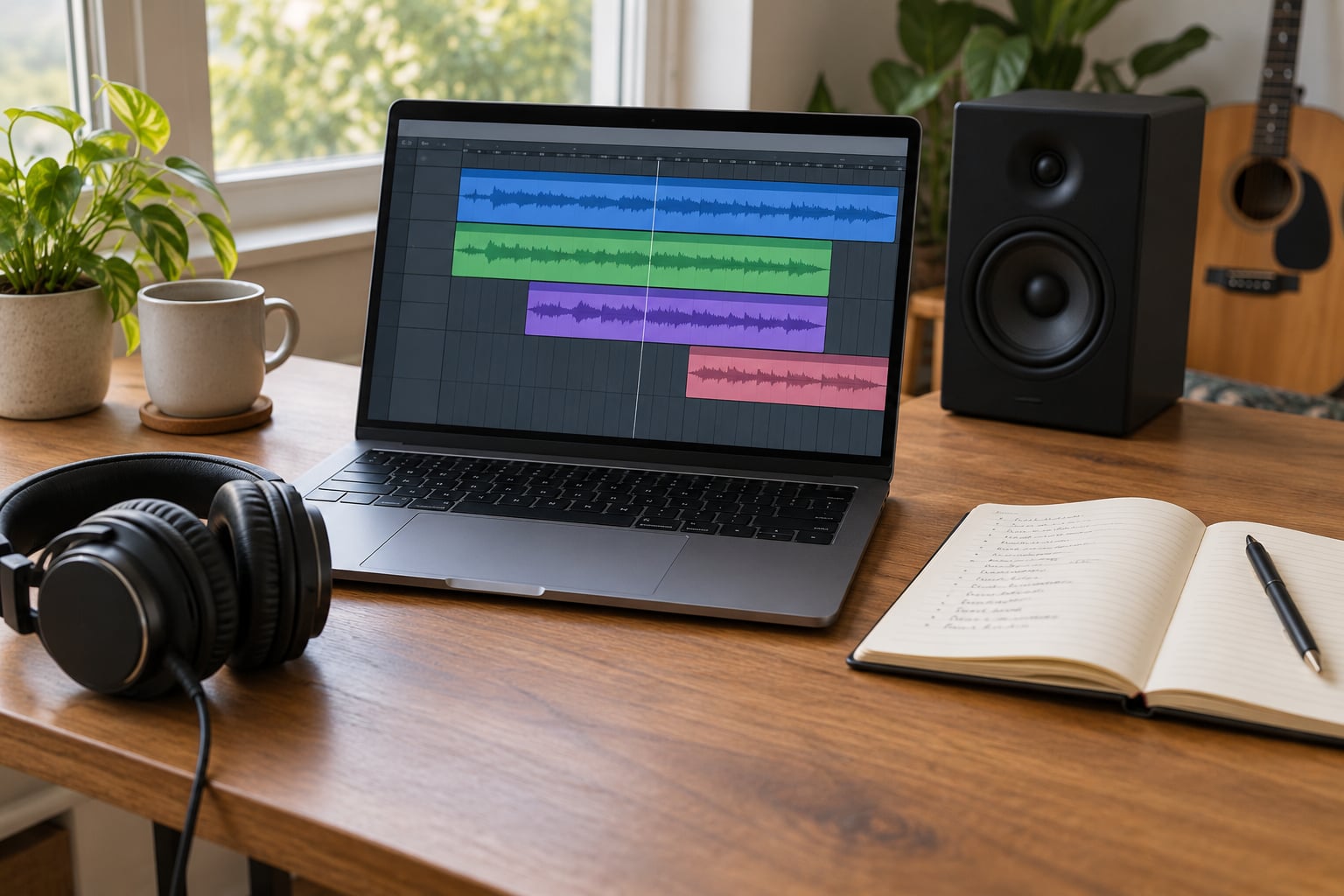
A sound selection shortlist is a deliberately small set of candidate sounds that you approve for a track before you start arranging. You pick them against a written brief and a running loop, score them on fixed criteria, then cut the list down to two or three per role. That is how to make a sound selection shortlist work as a real decision tool instead of another pile of options.
Why bother? Because selection decides whether the mix needs correcting or refining. Two sounds fighting over the same band push every fix later onto an EQ and a compressor, and corrective work never sounds as clean as simply swapping the sound. Getting the choice right first also removes the scrooling-about-with-the-transport-running time sink that eats an afternoon before you have written anything.
Most producers do the opposite. They audition forty loops in isolation, fall for the first three, build on them, and then spend the rest of the session wondering why nothing sits together. A shortlist replaces taste-by-mood with a repeatable check.
Table of Contents
- What You Need
- Step-by-Step: How to Make a Sound Selection Shortlist
- 1. Define the sound’s job in the track
- 2. Set fixed listening and scoring criteria
- 3. Test candidates in the actual track
- 4. Check frequency, dynamics, and arrangement space
- 5. Remove duplicates and weak contenders
- 6. Finalize a shortlist of two or three sounds
- Common Mistakes
- Picking on first excitement
- Judging a sound outside the track
- Comparing candidates at different loudness levels
- Using vague words instead of written reasons
- Shortlisting too many options
- Ignoring processing and arrangement constraints
- Frequently Asked Questions
- How many sounds should I put on a sound selection shortlist?
- Should I shortlist synth presets and samples in the same way?
- How long does it take to make a sound selection shortlist?
- What if a sound only sounds good after heavy processing?
- When should I revisit a sound I rejected during the shortlist process?
- Conclusion
What You Need
None of this needs new software. Everything already sits in a DAW. The preparation is what makes the comparing honest:
- The project, open and mixed as far as you have taken it. A sound that flatters a rough mix can disappear in a finished one.
- A labelled candidate folder or playlist. Drag twenty to forty possibilities into one place before you audition anything, so the search does not become the session.
- One reference track. Something in the genre and era you are aiming at, matched loudness and roughly matched tempo.
- A scorecard. A plain document or spreadsheet with your five criteria and a 1 to 5 column each.
- Audition tools. A level-matching plugin, a spectrum or meter display, and solo and mute. Your DAW ships with enough of this for the job.
Step-by-Step: How to Make a Sound Selection Shortlist
1. Define the sound’s job in the track
Before auditioning, write one sentence describing what the sound has to do: which section it lives in, what energy it carries, roughly where it sits, how much it moves, and what it should feel like. “Sub bass holding the drop in a darker techno track, mostly static, tension rather than groove” is a brief. “Cool bass” is not.
Once that sentence exists, every candidate gets judged against the same job. Without it, preferences shift with your mood and the last sound you played always looks like the winner.
2. Set fixed listening and scoring criteria
Five criteria cover almost every case: fit with the brief, character and tone, mix compatibility with what is already there, editability, and distinctiveness against your other picks. Score each one 1 to 5 and write a short reason next to the number. A score without a written reason is just a vibe you will misread an hour later.
The reason does not have to be long. “Kick is 60 Hz and the bass lives at 45” beats “sounds muddy” every time, because it tells you what to do next.
3. Test candidates in the actual track
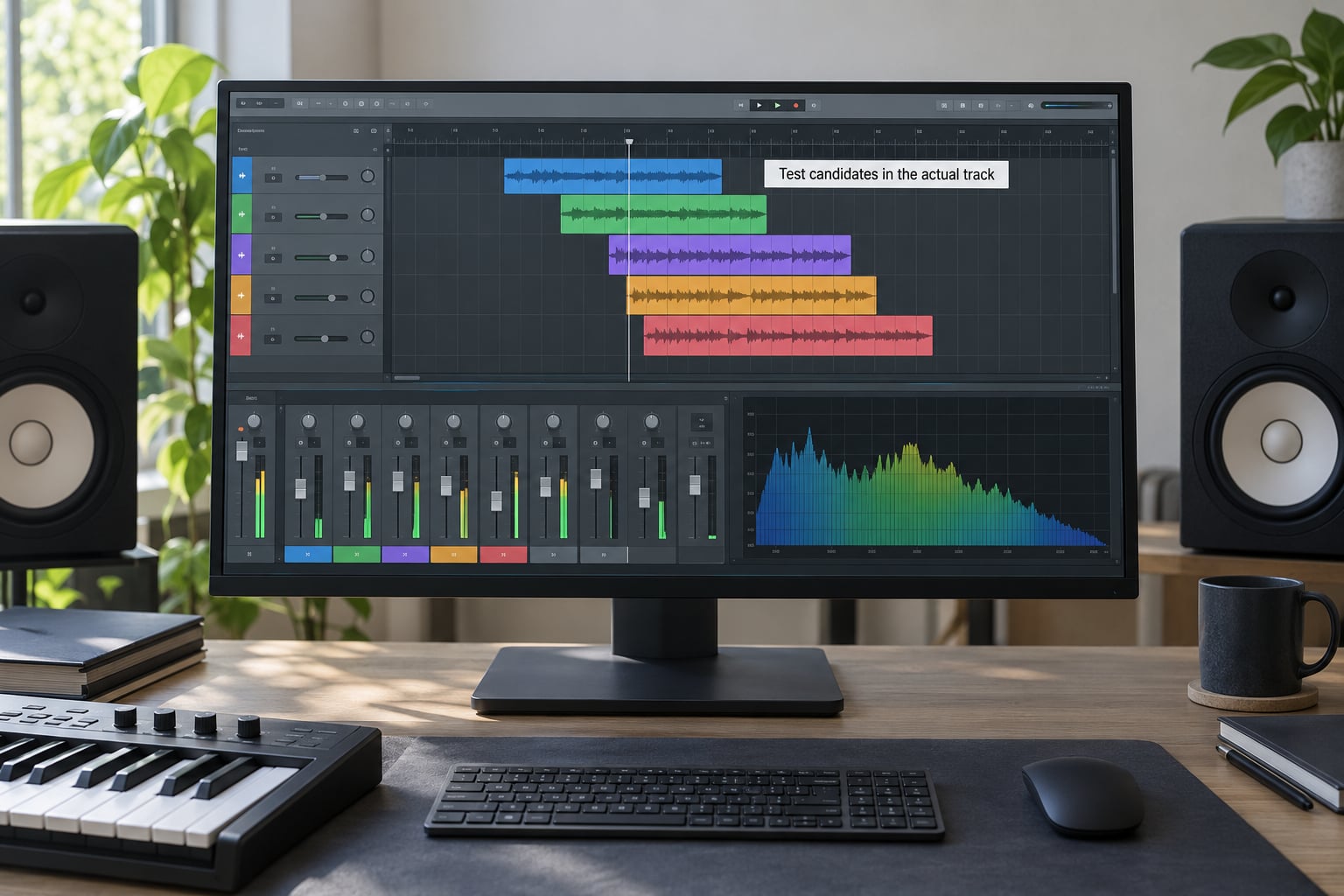
Audition every candidate in the exact section where it might live, over the loop that is already running, at matched loudness. Sounds that sparkle alone and vanish under a bassline are the normal case, not the exception.
Listen to three versions of each candidate: dry, filtered into the right register, and roughly processed. Leave every unrelated mix setting untouched. If you change the reverb and the low-pass on the channel to make a sound work, you have learned something real about how much work it needs, and that belongs in the scorecard.
4. Check frequency, dynamics, and arrangement space
Now switch from ears to numbers. Solo the candidate against the elements it will share space with and watch the spectrum display for overlap. A kick whose fundamental sits near 60 Hz and a sub bass that lives at 45 Hz will fight, and no amount of gain staging rescues it cleanly.
Check dynamics too. A heavily limited loop that arrives at full volume every bar leaves no dynamic room for anything else in the arrangement. And ask the arrangement question early: after this sound goes in, is there still somewhere for a vocal, a lead, or a noise sweep to live? Sounds that consume the whole frequency range pass in isolation and fail everywhere else.
Finishing producers tend to describe selection as the part that matters more than mixing. It is the point where most of the tonal character is decided, and it is much cheaper to decide than to repair.
5. Remove duplicates and weak contenders
Group survivors by function: kick, snare, hats, bass, melodic, texture. Inside each group, most candidates are near-duplicates of each other, and keeping four kicks means you will end up arguing with yourself all session. Keep the strongest and one genuine alternative.
That alternative is worth a specific word, not just “second best.” A darker version, a more aggressive one, a wider one. When the arrangement changes at 2am, an alternative with a known reason for existing saves the whole re-search. Anything that fails the brief goes, even if you like it in isolation.
6. Finalize a shortlist of two or three sounds
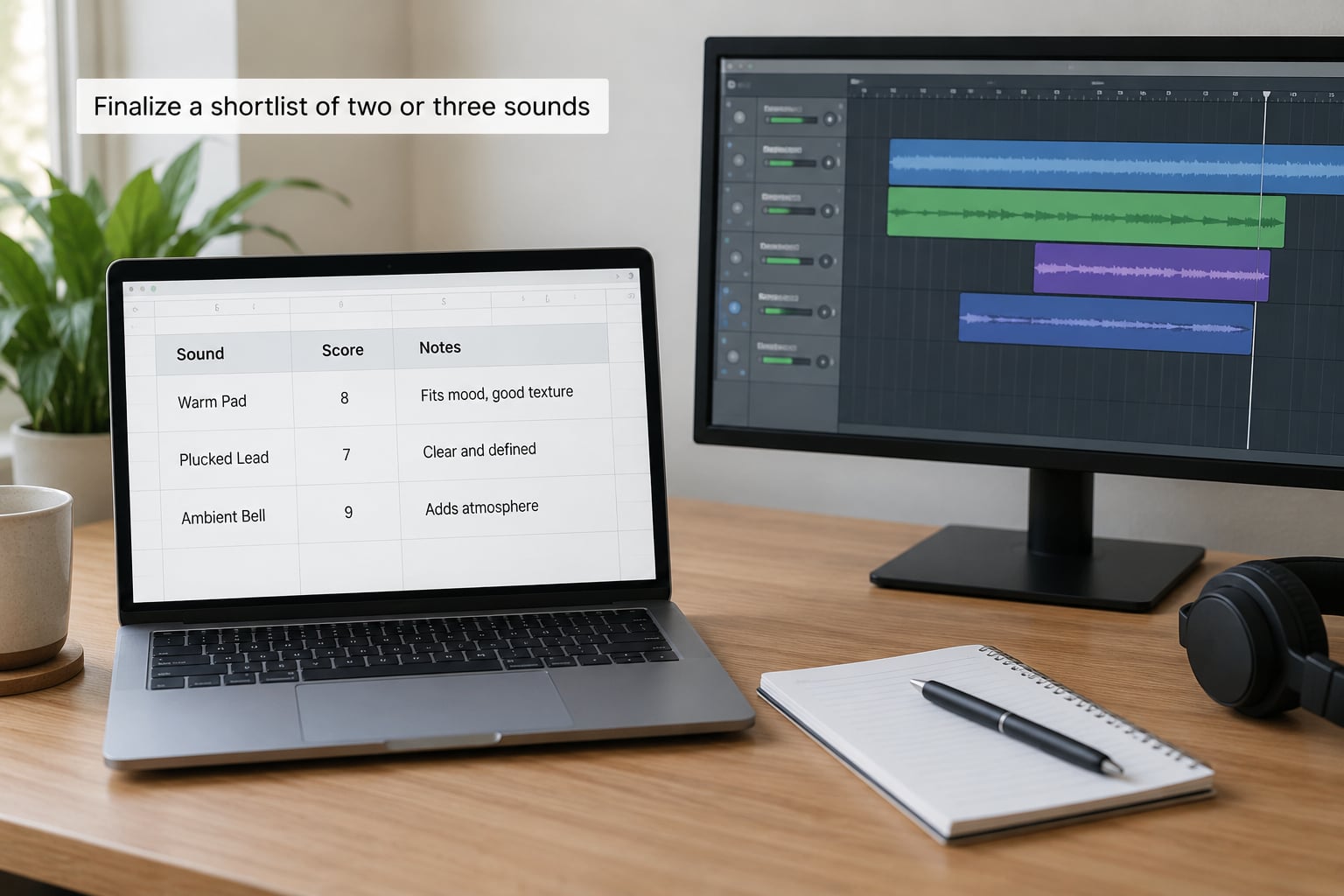
Bounce or play the strongest candidates against each other, back to back, at the same level. Write the deciding reason for each one in a single sentence: the one that wins does something the others cannot in the arrangement, not merely that it sounds best right now.
Then name the pick and the backup and close the shortlist. Adding a fourth candidate later is how a shortlist turns back into browsing. The two or three sounds that survive are the ones you arrange from, and the ones you stop second-guessing.
Common Mistakes
Picking on first excitement
The sound that got you excited in the first ten seconds is rarely the one that survives forty bars. Score it anyway, in context, after the brief is written. Tip: delay judgement until you have heard the candidate twice in the loop.
Judging a sound outside the track
Solo previews flatter almost everything, particularly loops with a full arrangement baked in. Judge the element, not the demo. Tip: pull the loop’s other parts down and hear what your new sound actually adds.
Comparing candidates at different loudness levels
The louder one wins every time, which is a level judgement disguised as a taste judgement. Match levels first, judge second. Tip: if your DAW has a level-matching or loudness-normalisation option on audition, turn it on.
Using vague words instead of written reasons
“Off” and “nothing special” tell you nothing ten minutes later. Write what you heard and where. Tip: describe frequency, envelope or register, not adjectives alone.
Shortlisting too many options
Ten finalists is a browsing session with a spreadsheet, not a shortlist. Cap each role at two or three. Tip: if you cannot say why the third option stays, it goes.
Ignoring processing and arrangement constraints
A sound that needs heavy time-stretching or arrives fully limited may not survive the arrangement even if it passes every other test. Score the work it needs and factor it in. Tip: time-box the shortlist to about twenty minutes so grinding on one sound does not eat the session.
Frequently Asked Questions
How many sounds should I put on a sound selection shortlist?
Two or three per instrument role is the working number, so a kick, snare, hats, bass, one melodic element and one texture give you roughly a dozen finalists for a whole track. Anything larger and you are browsing again rather than choosing. Keep a named backup for the roles that drive the arrangement, and cut the rest.
Should I shortlist synth presets and samples in the same way?
The process is the same, but presets get one extra step. A sample arrives recorded; a preset is a set of parameters you will still push around later. So audition each preset with one meaningful tweak already applied, and score it on how much the sound changes under that tweak as well as how it sounds untouched.
How long does it take to make a sound selection shortlist?
About twenty minutes per track role, including the audition pass, the scoring, and cutting duplicates. Faster than that usually means you skipped the in-context check, which is where the useful rejections happen. Longer than that and you are tweaking a single sound instead of shortlisting, so park it and come back.
What if a sound only sounds good after heavy processing?
Write down exactly which processing carries it and score the effort. Some sounds genuinely are raw material, and that is fine as long as you know the work involved. If the chain is more than a filter and a touch of saturation, keep it only as the named alternative, because every added step is another thing to revisit later.
When should I revisit a sound I rejected during the shortlist process?
Revisit a rejected sound only when the arrangement changes the requirement, not because the track feels finished and you are looking for an excuse to re-search. Two moments justify a second look: the vocal or lead arrives and clears space, or the reference track changes. Otherwise the decision stands.
Conclusion
Start with one sentence naming the sound’s job, load no more than six candidates that could fill it, and score them against the track rather than in isolation. Then cut the list to two or three finalists with a written reason each. That is how to make a sound selection shortlist you will actually arrange from instead of reopen tomorrow.