To voice chords across octaves, you give each register a separate job: the low octave holds the root and harmonic weight, the middle carries the defining third and seventh, and the upper octave doubles selected notes or adds movement for air. Do that deliberately and a four-chord trance progression stops sounding like a loop lifted from a tutorial.
The technique is less about theory than about restraint. Producers who build wide pads usually get the width and then lose the track, because every layer plays the same notes at the same volume. The fix is a decision process: decide the role, choose the spacing, double only what needs doubling, and check the result against the lead before you touch a single EQ band.
Below is the process I use when a progression needs to be wide but the low end is already busy. It runs in your DAW, but the same thinking works at a real keyboard. Assume roughly 30 minutes for the first pass on a new progression, and expect to revise the voicing twice more once the drums land.
Table of Contents
- What You Need
- Step-by-Step
- Choose the chord’s musical role
- Map the melody and important chord tones
- How to voice chords across octaves without creating mud
- Choose close, open, or mixed voicings
- Add or remove octave-doubling voices
- Check movement against the lead
- Process the finished chord stack
- Common Mistakes
- Frequently Asked Questions
- How many octaves should I use when voicing a chord?
- Should I double the root an octave higher or lower?
- What intervals create the best wide-sounding chords?
- Should chord voicings follow the bass notes?
- How do I voice chords across octaves in my DAW?
- Conclusion
What You Need
You need very little to start, and having too much is usually the problem. The musical material comes first, the tools second.
- A four-note chord. A seventh chord, a triad with an added ninth, or a four-note stack from your sample library. Drop-2 style doubling needs at least four notes to have anything to drop.
- A reference melody or lead line. Even a two-note motif. The top of your chord stack will be heard as melody whether you intended it or not, so you should decide what it is before you place notes.
- A DAW project with MIDI editing. A piano roll or matrix view is what makes this work, because you are moving individual voices, not recalling shapes by feel.
- Per-track gain, EQ and a compressor so each register can be balanced independently.
- A reverb send you can automate per layer, and optionally a saturation plugin on the mid and high layers.
That is the whole list. If you are starting from a loop, load it first, because the loop’s own register choices will fight anything you add later.
Step-by-Step
Choose the chord’s musical role
Before touching a note, decide what the chord is doing in the arrangement. There are four jobs, and they want completely different voicings.
- Foundation. A low root plus a fifth, sitting under the whole track. It needs no doubling because the bass is already doing the weight.
- Emotional upper layer. A pad that carries the progression’s emotion. This is where the extra octave earns its place.
- Rhythmic hook. Short stabs that hit on the offbeat. Density hurts here more than anywhere else.
- Tension device. A voicing that deliberately includes a dissonant interval, usually a minor ninth above the root, used for one or two bars before a release.
Most muddy progressions come from treating all four at once. Pick one job for the octave above your bass and leave the others out for now.
Map the melody and important chord tones
Put the progression somewhere comfortable on the keyboard first, roughly around middle C, where you can see the whole shape without scrolling. Then label the tones.
Find the root, the third, the fifth and the seventh on each chord. The third and seventh are the guide tones: they define the chord’s quality, so they are the last two notes you should ever drop or cover. The fifth is usually the first to go when you need space.
Now mark which tones clash with the lead. Any note within an octave of a lead note that shares a pitch class will fight it. Notes in the same register as the lead, but a seventh or ninth above it, usually sit behind it fine.
How to voice chords across octaves without creating mud
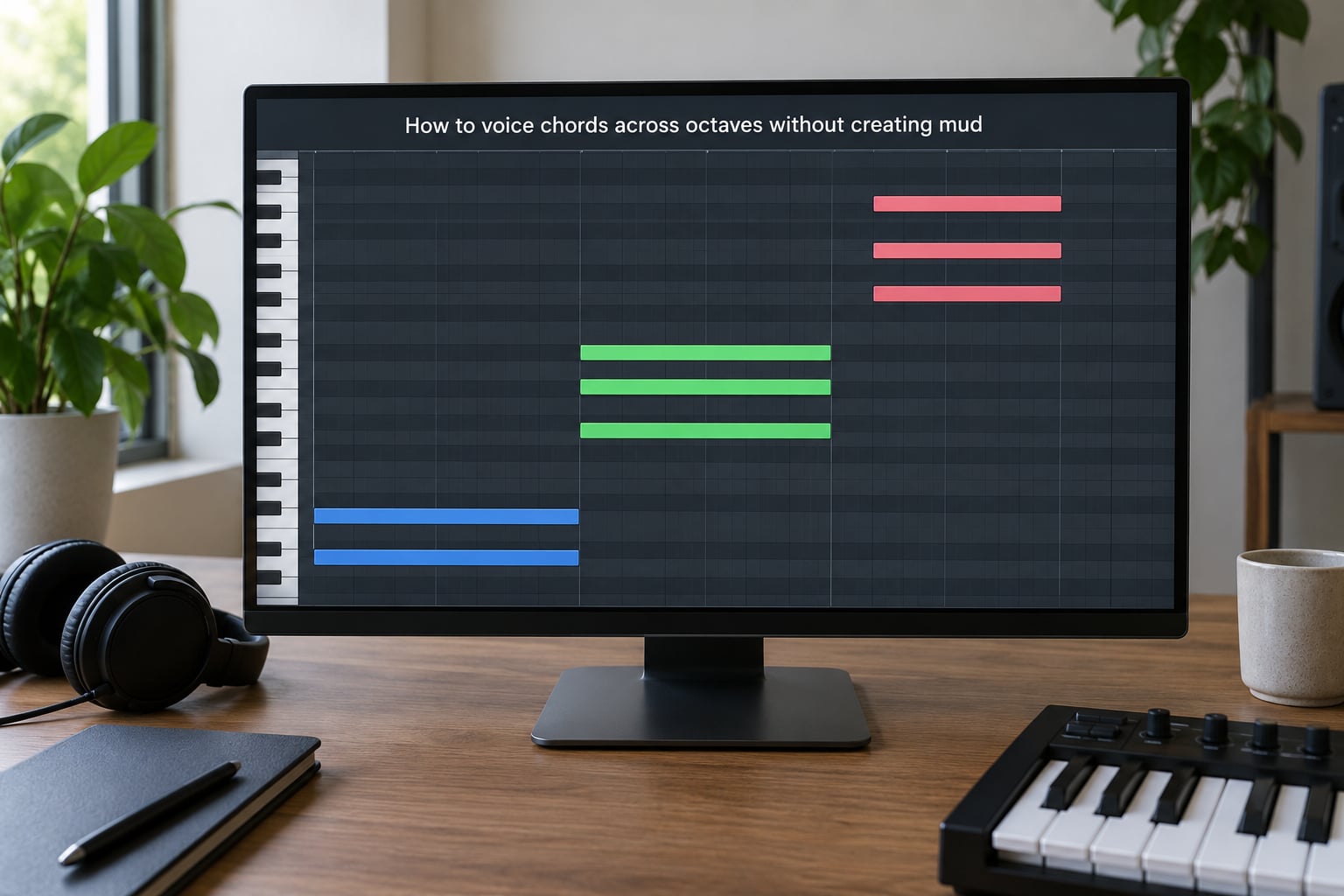
Spread the chord across registers so each one has a clear purpose, and the mud problem mostly solves itself. The low octave carries the root and, if the arrangement needs it, the fifth. The midrange holds the third and seventh, where they have the clarity to define the chord. The upper octave carries doubled notes or colour tones, and only if there is room between the voicing and the lead.
Three rules keep it clean. Do not play the same low note twice in the same octave, because a doubled root an octave apart in the low register builds up low-mid energy exactly where your bass sits. Do not let the left hand and right hand play the same pitch class in the same octave; that is the classic clash, and moving one of them an octave fixes it instantly. And keep gaps: an empty register is what makes the wide one sound wide.
A useful test: solo the low layer, then solo the mid, then the top, and check that each one still tells you something. If the mid layer sounds like an unfinished chord on its own, your low layer is carrying the harmony for you and the mid is just decoration.
Choose close, open, or mixed voicings
Close position puts every note inside one octave. It sounds dense and focused, works well for short stabs and for anything sitting high on the keyboard, and gets muddy fast in the low register. Open position spreads the same notes past an octave, which sounds transparent and wide but can sound thin if the arrangement has nothing else in the middle.
Mixed voicings are the practical middle ground for trance and house. A common shape is root plus fifth in the low octave, then third and seventh an octave or more above, with one upper voice doubled. You get the width, the chord still reads as a chord, and the notes in between stay out of the way.
Whichever spacing you pick, commit to it across the progression. Changing spacing mid-loop makes a progression sound like it changes key when it does not.
Add or remove octave-doubling voices
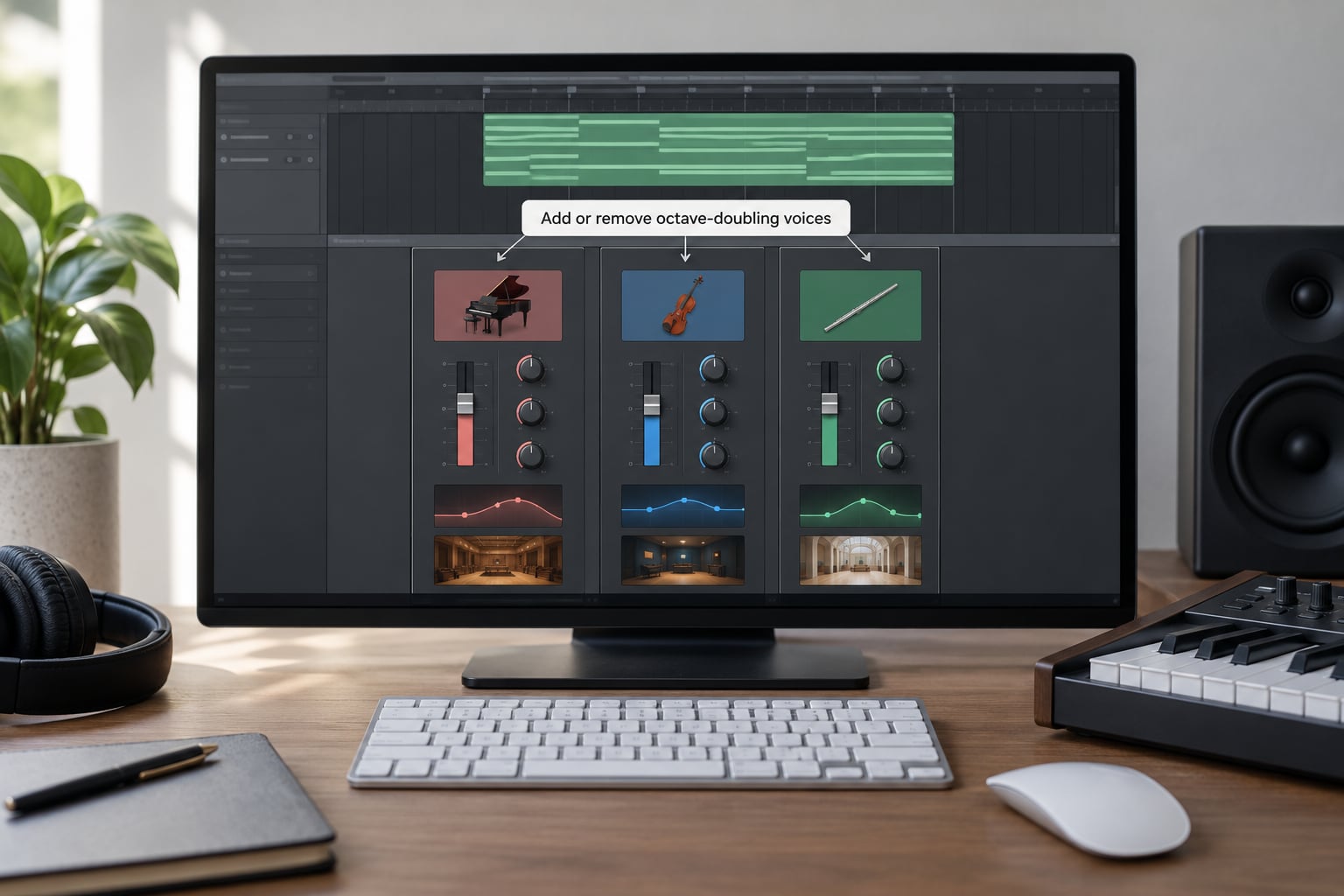
Not every note needs a duplicate. The usual rule for EDM is to double the root an octave up, or double the fifth, but not both, and never double the third or the seventh because they are what tell the ear which chord it is.
Decide the octave distance. One octave gives body and is the safest first move. A twelfth or a fifteenth sounds huge and works in trance breakdowns where you have space, but it needs a lower layer underneath or the chord floats untethered.
Then decide where to leave gaps. A doubling voice that never stops is the reason a pad starts to feel like a wall. Automate it: bring the upper octave up for the release, pull it down under the vocal or the main lead, and take it out entirely for two bars before a drop so the drop has somewhere to go.
Check movement against the lead
Play the progression with the lead in place and watch the biggest jumps between chords. Any voice leaping more than about a fifth between two adjacent chords tends to sound like a mistake rather than a choice, especially in a slow progression.
Smooth the worst ones first, then leave the movement that helps. Contrary motion between the chord and the lead, where one goes up and the other goes down, usually makes a change feel like it opens up. Parallel motion in similar motion, both moving the same direction, works fine for a build where you want momentum.
Check each chord change on its own too. Play two chords, stop, and listen. If you cannot tell which chord you heard first time without looking, the voicing is too dense for that part of the arrangement.
Process the finished chord stack
Only now touch processing, and keep every layer on its own track so you can still move the voicing later.
Set the gains first so each layer is roughly level, then raise the pad until the whole stack sits about 6 dB below your lead. That gap is doing real work. Sweep a low-pass or high-pass EQ on the low layer to keep it out of your bass fundamental, and carve a small dip in the midrange layer where the low layer and the lead compete.
Use compression to even out a pad’s attack, not to force a stab to be bigger than the kick. A short release under a hundred milliseconds keeps a stab crisp; anything longer turns it into a wash. A light saturation on the upper layer adds density without adding notes.
Automate the reverb send and filter movement across the arrangement, then audition in the full mix with drums. Voicings that sound wide in isolation usually sit still, and that stillness is what makes a wide pad sound thin.
Common Mistakes
Muddy low mids. A close chord in the low register plus a sub bass line and you have three sources piling into the same frequencies. Move the chord up an octave, or replace the low layer with just the root and fifth.
Every chord uses the same shape. Identical octave stacks across a progression sound like a machine wrote them. Change the bass note for each chord and let the top voice follow your lead.
Doubling the lead note. If your top chord voice sits exactly on the lead pitch an octave below, it thickens the melody into mush. Drop the top chord voice, or push it up above the lead so the ear reads it as an accent.
Too many notes at once. Four notes per chord is plenty for a pad. A fifth layer voice often sounds better as a separate, quieter layer than as one more chord tone.
Harsh upper octaves. Sibilant synths and high saws get shrill fast when doubled. High-pass the layer gently, lower its level, or roll it back for the busiest sections.
Mechanical doubling. A doubled voice that never changes is wallpaper. Automate its level and add variation to its timing so it behaves like a part rather than a layer.
One final check catches most of these: loop the progression for two minutes and walk away for a minute before listening back. If a chord disappears or an octave sticks out the moment you stop paying attention, that is the note to fix.
Frequently Asked Questions
How many octaves should I use when voicing a chord?
Two is usually enough for a full, wide sound in trance and house. Three octaves works when you have very little else in the arrangement, such as a breakdown with just a pad and a vocal. Beyond three, the notes at the extremes stop contributing to the harmony and only add reverb tail, so check the result before adding a fourth octave.
Should I double the root an octave higher or lower?
Higher, almost always. Doubling the root an octave up adds brightness and reinforcement above the bass line without competing with your sub. Doubling it downward thickens the low end, where the bass already lives, and that is the fastest route to a muddy mix. If the low octave feels empty instead, raise the whole voicing rather than stacking more weight underneath.
What intervals create the best wide-sounding chords?
Octaves for the root, a twelfth for added weight, and a fifteenth for maximum spread. Between upper voices, thirds, sixths, tenths and minor ninths sound open without becoming hollow. Minor seconds and major sevenths between adjacent upper voices read as tension, so they work well in a breakdown but sound like a mistake in the main drop.
Should chord voicings follow the bass notes?
They should not copy them exactly, but they should agree with the bass on the root of each chord. If your bass line walks through chord tones, leave those tones out of the voicing so the two layers do not fight. When the bass holds a single root for several bars, try a rootless voicing using just the third, seventh and colour tones above it.
How do I voice chords across octaves in my DAW?
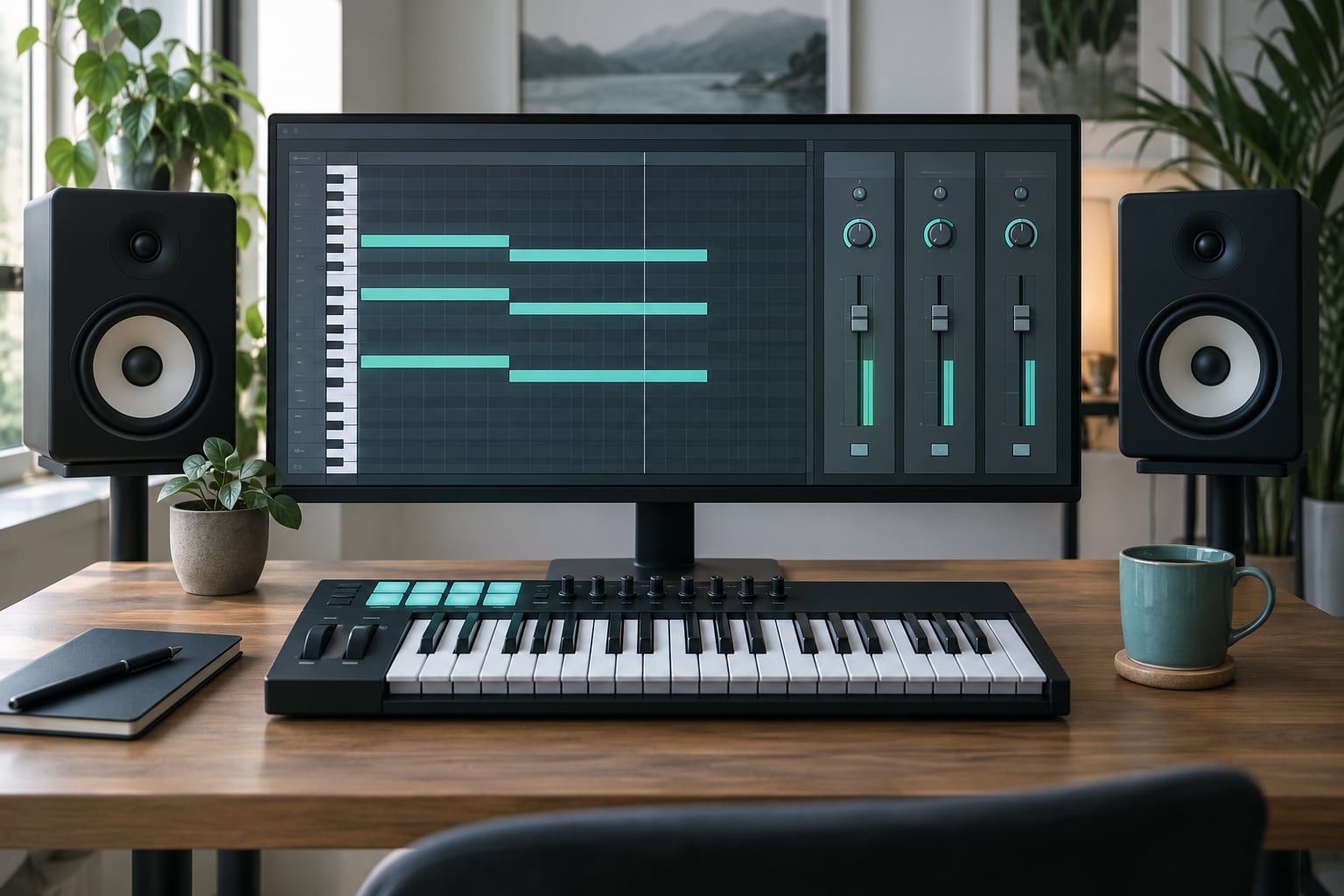
Draw the chord in a piano roll at middle C, then copy the notes into separate tracks by register: low root and fifth on one track, third and seventh on another, doubled or colour tones on a third. That gives you one fader, EQ and reverb send per octave. Move notes individually rather than transposing whole chords, and you can adjust the spacing of any single voice.
Conclusion
The fastest version of this process takes about ten minutes: pick the chord tones that support your lead, spread them across two or three registers with one octave per track, double only the root or the fifth, and listen to every chord change before you process anything.
Start with the midrange, since that is where a chord either defines itself or does not. Get the third and seventh sitting clearly next to your lead, then build the low and high octaves outward from there. If you hear a layer disappear the moment you stop listening closely, that is the register to fix first.